
elea Highlights
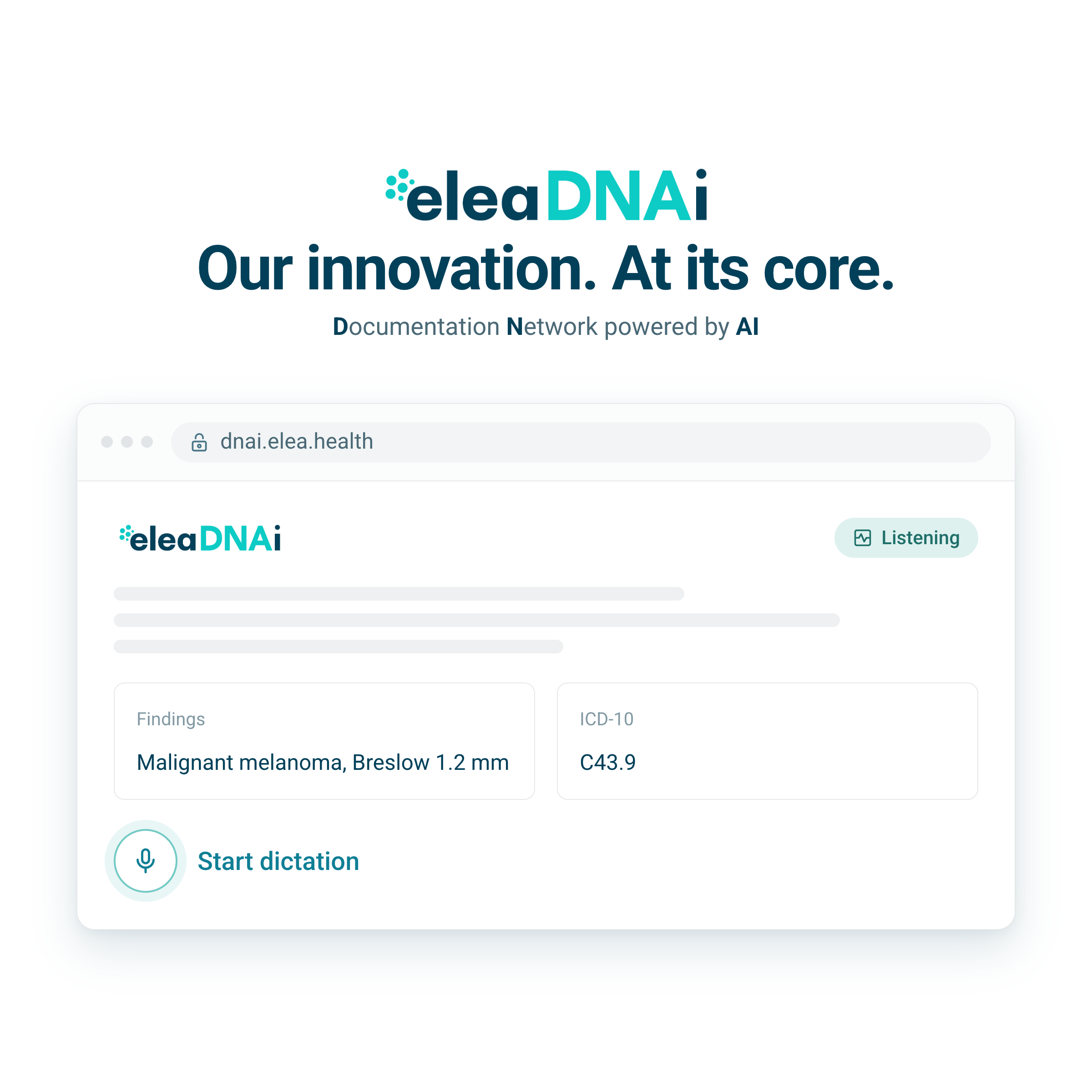
elea DNAi. Our innovation. At its core.
elea DNAi, our Documentation Network powered by Artificial Intelligence, is the core AI technology of elea Lab. It understands pathology context and turns the pathologist's spoken assessment into structured, coded documentation while they speak.
One flow, from spoken word to structured record: hands-free dictation goes straight into the report, code lookups happen without leaving the case, and internationally certified reporting templates, including synoptic documentation, are populated along the way. Interoperability then carries that structured information into the systems the laboratory already runs on.
We have now made this core available on its own: inside partner platforms, as an enterprise solution connected to an existing LIS, or as a standalone solution for a single pathologist. In every setup, the pathologist stays in control, every generated document is reviewed and edited before sign-out, and diagnostic judgment remains with the physician.
.png)
Partnership in Practice
Techcyte and elea bring AI-native pathology documentation into Techcyte Fusion®
This month, Techcyte announced the availability of elea DNAi, our AI-native pathology documentation technology, within Techcyte Fusion®.
Digital pathology has changed how pathologists access and review cases. Documenting the diagnosis often didn't keep up, it stayed a separate step, spread across systems, tools, and workflows. With this integration, pathologists can now turn their real-time verbal assessment into structured, coded documentation, including synoptic reporting, directly inside the diagnostic workspace. A voice command or a single click is enough, and interoperability supports the flow of that information into downstream systems.
This goes beyond transcription. elea DNAi understands pathology context, and the pathologist remains in control throughout, with every document reviewed and edited before final sign-out.
The integration also marks something bigger: elea DNAi is now available beyond elea Lab. Making our core documentation intelligence accessible within third-party platforms is a deliberate step toward a more open and connected pathology ecosystem, one where more pathologists can benefit from an AI-native assistant designed specifically for their work.
OnePath Diagnostics: a partnership built station by station
The OnePath Diagnostics lab in Jacksonville runs on elea's AI-native Pathology Operating System. OnePath is one of the largest pathology groups in the U.S., operating across many locations nationwide, and the lab side of every case is orchestrated in one place: accessioning, grossing, specimen tracking, and the handoffs in between, with case status visible to everyone who needs it. The diagnostic work stays where OnePath's pathologists already work, distributed across their network, and they sign out every case.
What makes this partnership special is not the technology alone. The OnePath team brings deep knowledge of their own workflows, openness about what works and what doesn't, and a willingness to improve things together. Our team spends many hours on site and on calls, working alongside the people who use the system every day, listening, learning, and turning that feedback into improvements that work in the real lab.
That is what partnership means to us: not simply delivering software, but two teams working toward a shared ambition, making complex pathology workflows simpler and better for the people doing the work.
.jpg)
In the Field
Meeting the next generation at YSP 2026
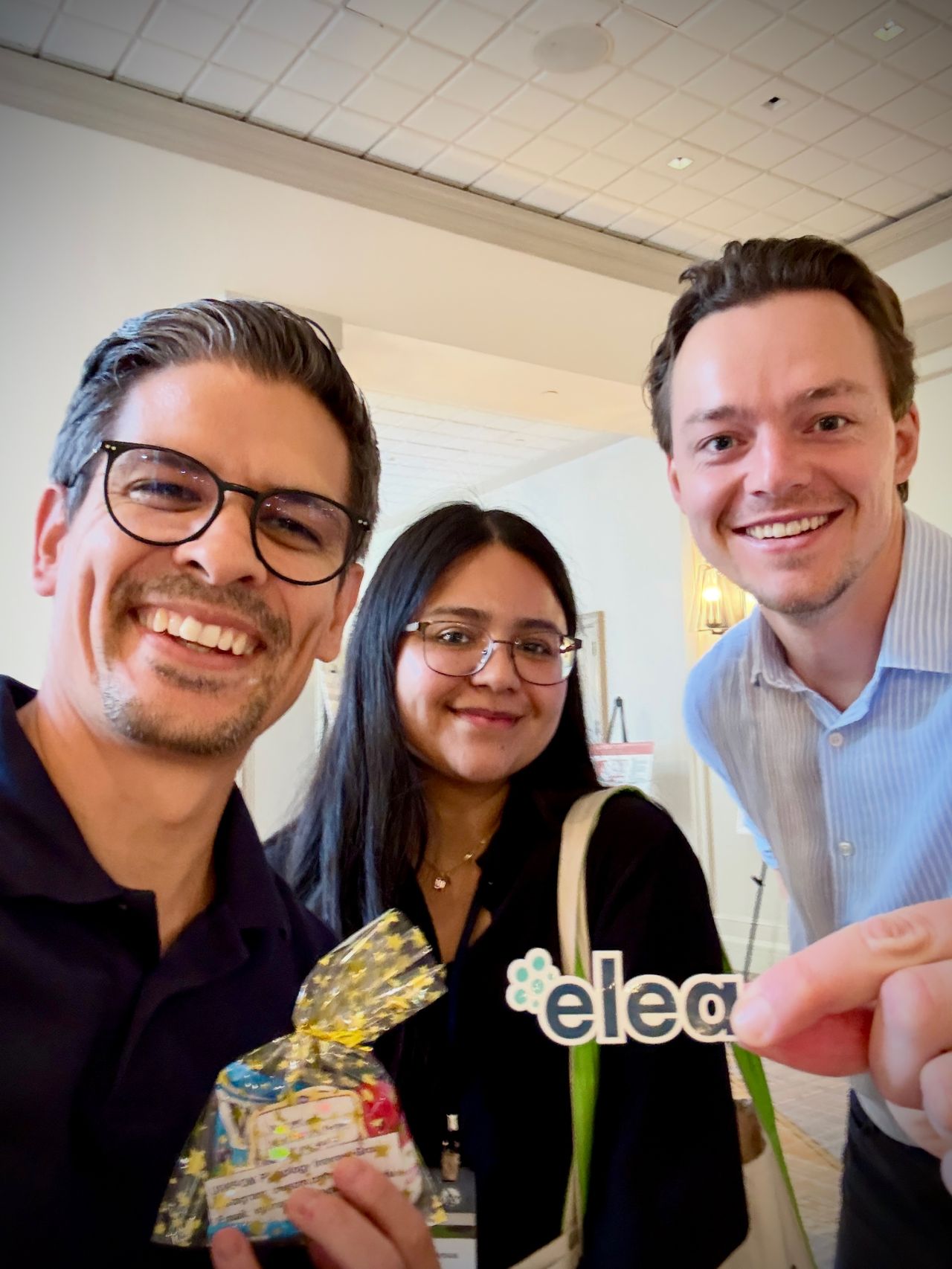
At YSP 2026 in Texas, we had the pleasure of meeting Valeria from the UIWSOM Pathology Interest Group in San Antonio, a group that brings together medical students with a particular interest in pathology, giving them room to learn and explore the specialty beyond their regular curriculum.
We think initiatives like this matter. Pathology is changing rapidly through digitalization, AI, and new ways of working, and having the next generation involved in these conversations early makes a real difference. We would be glad to continue the exchange and support the group with a session on AI and the future of pathology.
Read of the Month
The Royal College of Pathologists on the forensic pathology workforce
A specialist shortage is usually read as a hiring problem. The Royal College of Pathologists' new report on the UK forensic pathology workforce suggests a second reading: the working week averages around 42 hours, of which about 40 percent goes into administration, slightly more than the postmortem examinations themselves.
In other words, the scarcest specialist in the building spends more of the week on paperwork than on the work only they are qualified to do. The specialty differs, but the split looks familiar in most laboratories.
Hiring takes years. The paperwork can change much sooner, which is exactly the part of the problem elea works on.
What's Coming Next?
Workshop days in Hamburg
In early September, the elea team gathers for a few days in Hamburg, time for brainstorming, deeper discussions, and building on the collaboration that carries our everyday work.
We'll look back at what we've achieved so far and set our sights on the milestones ahead. More on that in the next edition.
And if you'd like a more informal look behind the scenes, elea is now also on Instagram.