
elea Highlights
Behind the Scenes: Workshop Days at elea
Some of the most important work we do doesn't happen in product releases or conference booths. It happens in rooms like the one we gathered in this month.
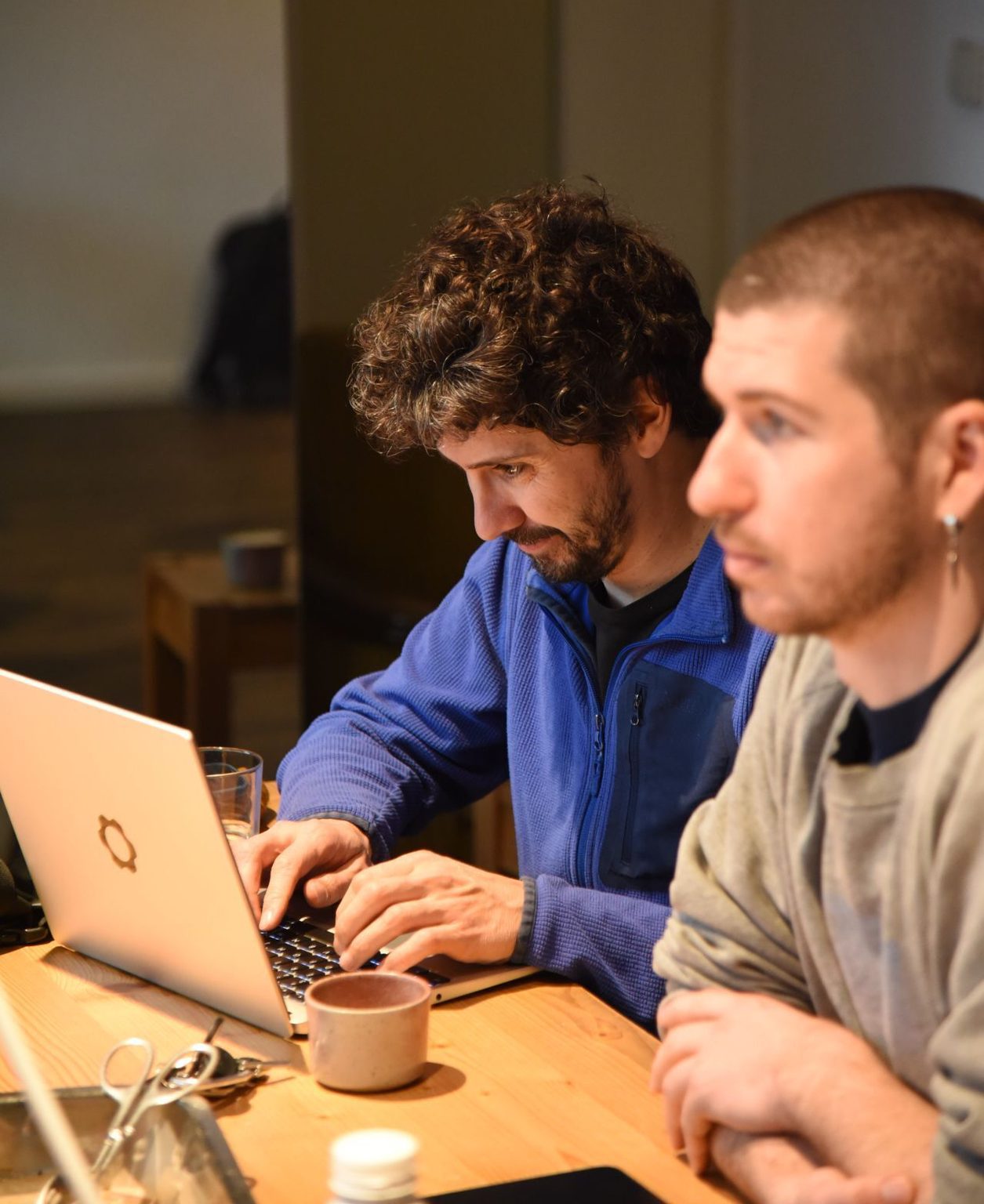
During our workshop days, the whole team came together to work through real workflows, test ideas directly, and adjust things on the spot. Whiteboards filled up. Conversations built on each other. Problems that tend to sit unresolved for weeks found their answer in an afternoon.
There's a particular kind of momentum that comes from being in the same room, where a question raised in the morning shapes a decision made by the end of the day. These sessions are where elea's best ideas take concrete shape, and this month was no exception.

Signals from the field
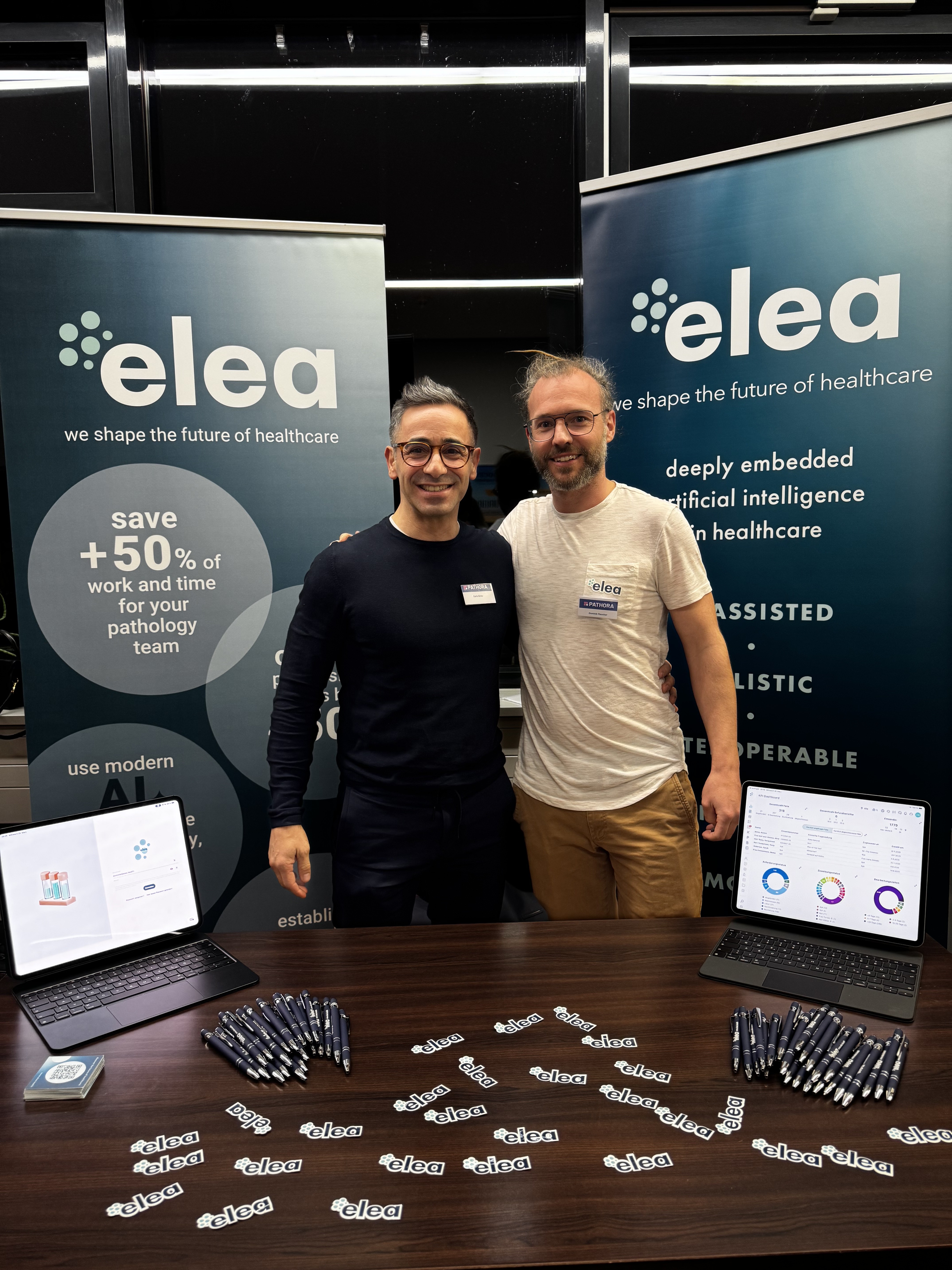
elea at the Florida Society of Pathologists Annual Conference 2026
In mid-February, we attended the FSP Annual Pathology Conference in Orlando. The FSP brings together pathologists from a wide range of practice settings, and the conversations reflect that variety, covering everything from daily documentation challenges to broader questions around where digital support actually helps in clinical practice.
We were there to listen as much as to share. The perspectives we heard consistently pointed in the same direction: what labs need isn't more standalone tools. It's reliable, embedded support that fits into how they already work.
The People Building elea
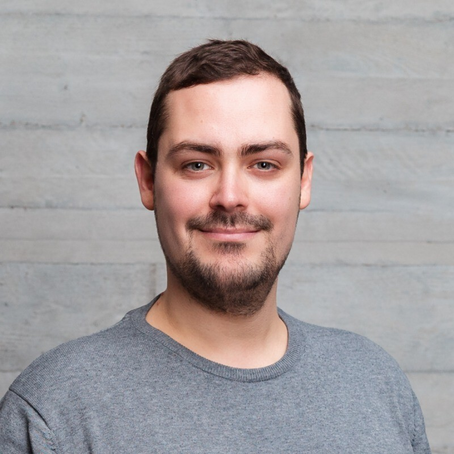
Mathis Zeiher - Lead Backend Developer
Every system that runs reliably in daily pathology practice depends on decisions made long before anyone opens the interface. Mathis Zeiher, our Lead Backend Developer, is the person responsible for many of those decisions.
For Mathis, stability, security, and performance aren't abstract engineering goals, they're the foundation on which clinical teams build their trust in a system. His measure of success is simple: when the system is stable enough that users don't have to think about it, it's working.
What's often underestimated about backend development, he says, is that the hard part isn't solving technical problems, those can almost always be solved. The real challenge is balance: finding solutions that are technically sound, economically reasonable, and create genuine value for the people using them. That means making many decisions every day, fast, and weighing them across multiple dimensions at once.
For Mathis, a strong engineering team comes down to trust: trust in each other's technical judgment, trust that things get fixed without micromanagement, and a shared sense of direction that keeps everyone focused on what matters. On the harder days, that team is what keeps him going.
When he's not at his computer, you'll most likely find him by the sea or at a skatepark.
Welcome to the Team
Julian König
Flutter Developer
We're glad to welcome Julian König to elea this month. Julian brings over five years of experience as a Flutter Developer, with strong expertise in building full-stack applications at scale, a solid background in CI/CD and cloud infrastructure, and the distinction of being a Docker Captain: a reflection of his commitment to high-quality engineering practice.
What stands out about Julian is his ability to combine clean architecture with scalable delivery: products that are not only well-built, but built to grow. At elea, he'll strengthen our technical foundation and contribute to the infrastructure that the future of healthcare runs on.
Welcome to the team, Julian!
Read of the Month
Multimodal AI: The next real step in pathology
A research team from the University of Minnesota recently published a study that puts numbers behind something the field has long suspected: AI models that combine whole slide images with pathology reports outperform those working from images alone.
Their framework, MPath-Net, fuses visual features from digitized slides with text embeddings drawn from clinical pathology reports, achieving close to 95% classification accuracy across kidney and lung cancer subtypes. But the more important finding is what drives that gap. It’s not just the model, it’s context.
A diagnosis is not reducible to what a slide shows. It emerges from morphology considered alongside patient history, molecular data, prior results, and clinical context. AI that only sees pixels stays limited. When it incorporates the full picture, it becomes clinically relevant. The study makes this concrete: the gains are not just incremental, they reflect what happens when a system starts to approximate how pathologists actually reason.
The bottleneck for this kind of multimodal AI is not whether it works. It’s whether the underlying infrastructure can bring images, reports, and clinical context together in the first place. That is a structural challenge, and one that sits at the core of what elea is built to solve.
What's Coming Next?
We'll be at USCAP in San Antonio, TX and the PATHORA Symposium on Bladder Cancer in Reutlingen, two very different settings, both valuable for the conversations they bring.
We also have some news in the works around partnerships and external recognition that we're looking forward to sharing. More next month.