

elea Highlights
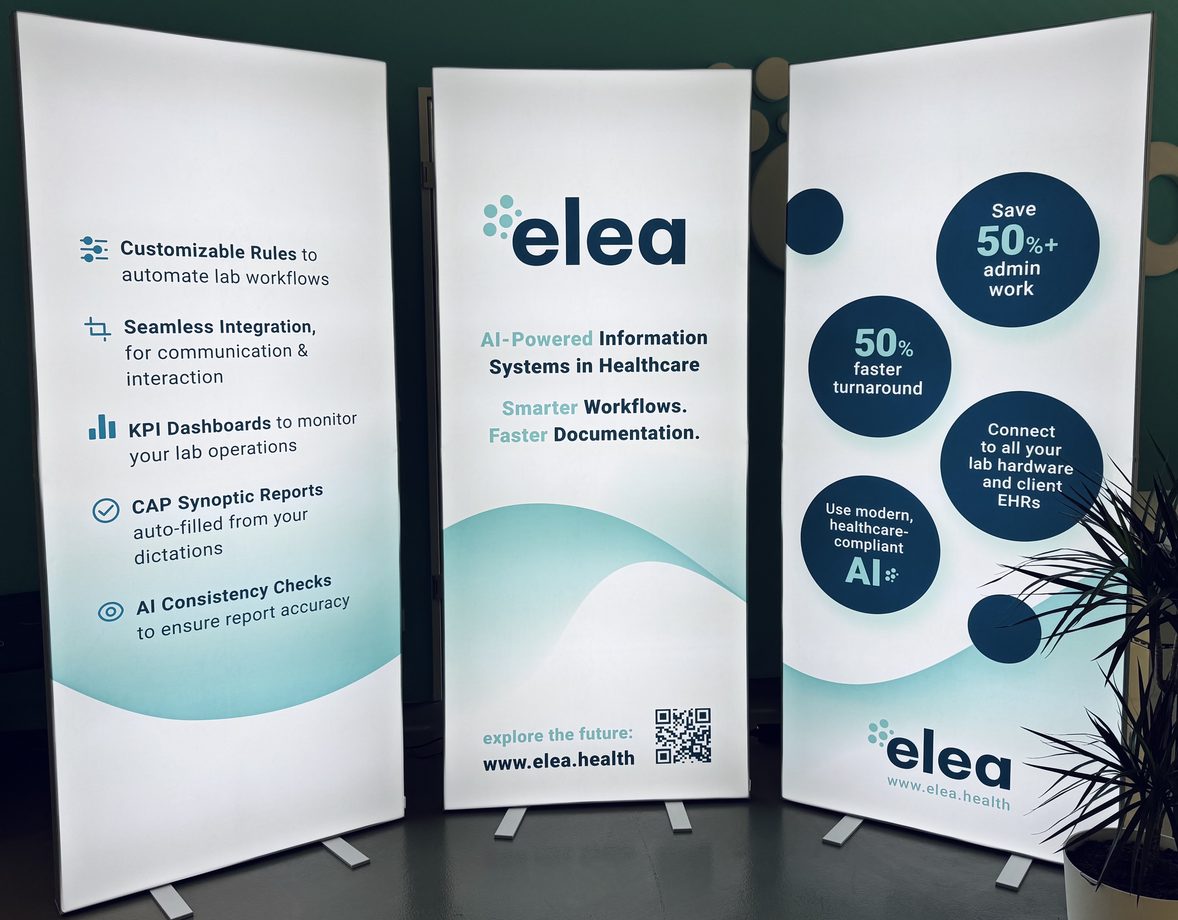
elea at the Digital Pathology & AI Conference in London
At this year's Digital Pathology & AI Conference in London, the conversation kept moving in one direction: away from standalone algorithms, toward end-to-end workflow support. That shift reflects exactly what we've been building at elea.
Our Chief of Staff Richard Gruner walked attendees through our integrated LIS platform, bringing accessioning, lab processing, slide tracking, reporting, and case sign-out into a single system. AI is embedded across the workflow not as a headline feature, but as quiet support: structured data capture, voice-driven grossing, real-time case assembly, and flagging of inconsistencies, all while maintaining full oversight and compliance.
The response confirmed something we hear consistently in the field: clinicians aren't looking for more tools. They're looking for fewer handoffs and more reliable execution. That's what elea is built for.
With a growing international presence, we're looking forward to continuing these conversations as the field moves forward.
Signals from the field
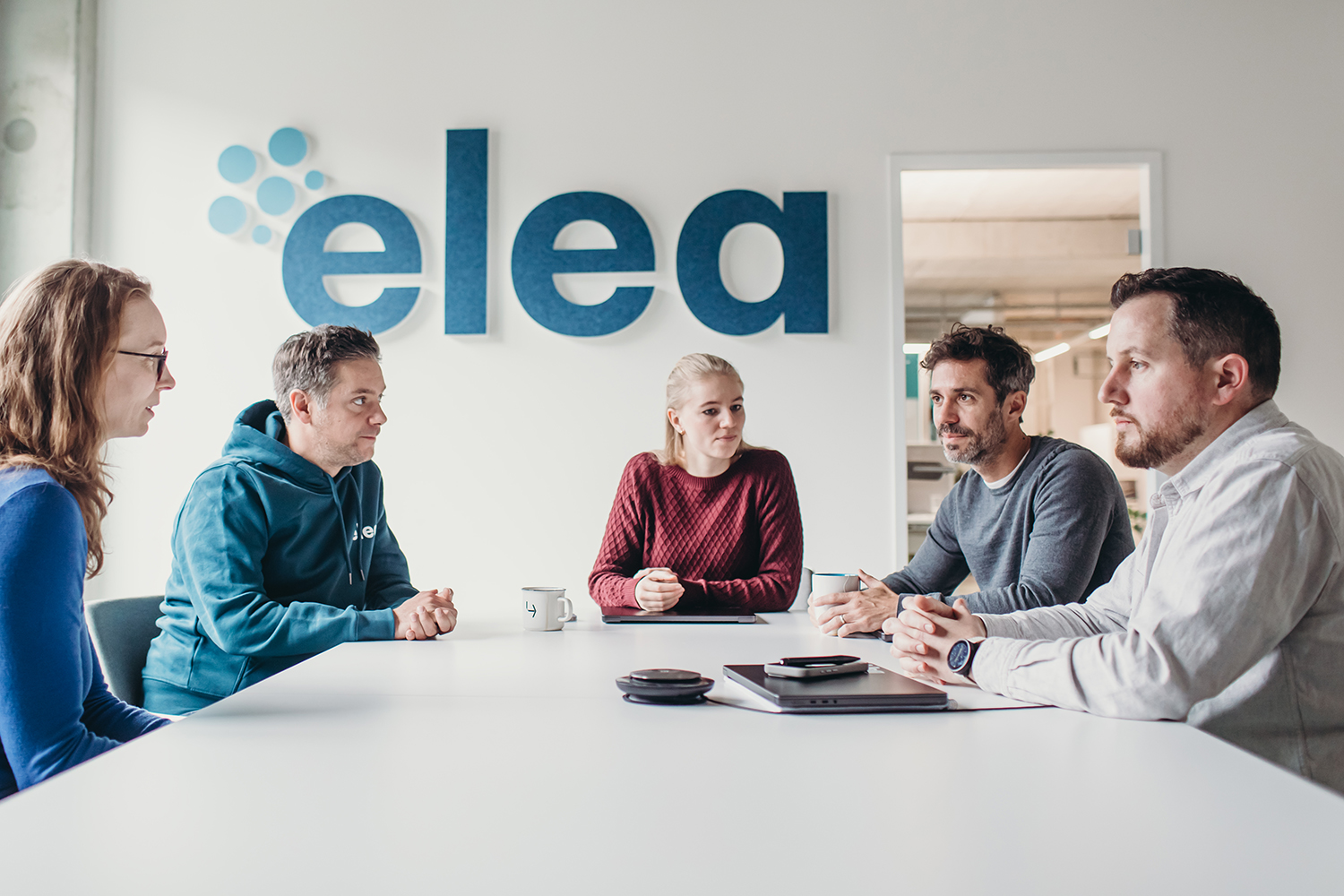
Bamberger Morphologietage: wrapping up a few days of exchange
The Bamberger Morphologietage brought together pathologists and lab teams for focused discussions around workflows, documentation, and the realities of daily clinical practice. Taking elea into those conversations in person made the feedback immediate and concrete.
One theme kept surfacing: AI-supported tools are most valuable when they integrate seamlessly into routine work, not when they ask teams to adapt around them. That's a principle we carry directly into how we build.
We're grateful to everyone who took the time to share their perspective. These conversations shape what comes next.
Read of the Month
"Pathology Trends 2026" - The Pathologist
The Pathologist opened the year by asking its readership where the field is genuinely heading. The expert panel's conclusions were consistent: pathology is entering a more disciplined phase, one less focused on acquiring new technology and more on making technology work reliably in daily practice.
The framing that stood out most: pathology is shifting from "digitize slides" to "digitize decision-making." The question is no longer whether to adopt new tools, it's how to integrate them in a way that genuinely reduces complexity and delivers value at scale.The labs moving fastest are not necessarily those with the most software. They are the ones that embed technology into functioning workflows, clear governance structures, and well-prepared teams.
Workforce readiness and AI integration ranked as the top investment priorities for 2026, because even the best tools only deliver when the foundations are in place to support them.
The right technology, implemented well, is what moves the field forward.
That is precisely the challenge elea was built for: an AI-powered operating system that doesn't just offer software, but provides the full infrastructure for modern pathology workflows, from order to final report.
Welcome to the Team
Carlo Sirna
Head of Growth
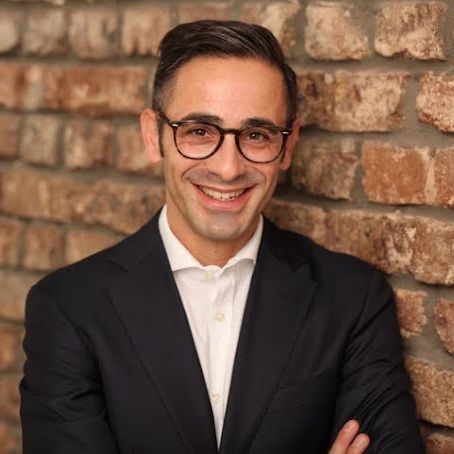
We're glad to welcome Carlo Sirna as our new Head of Growth. Carlo brings over 18 years of experience across MedTech and IVD, with a particular focus on pathology and molecular diagnostics, and a track record of driving commercial growth across European markets.
At elea, Carlo will lead our go-to-market strategy and help build the foundation for the next phase of our growth journey. Welcome, Carlo!
Wenzel Vogel
Customer Success Management
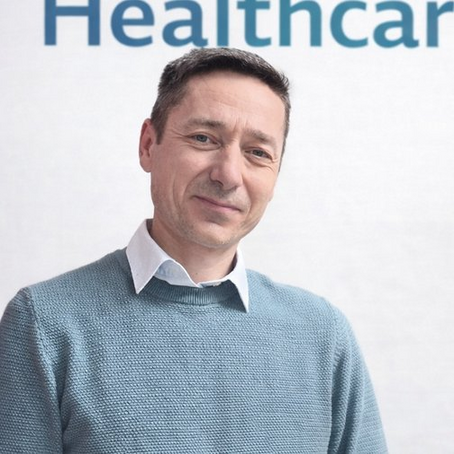
We're also excited to welcome Wenzel Vogel to elea. Wenzel brings several years of hands-on laboratory experience and has led LIS implementations and migrations across Germany and Austria, giving him a grounded understanding of what clinical teams actually need from the systems they rely on.
At elea, he'll strengthen our Customer Success function, helping customers achieve real, measurable impact through reliable digital solutions. Welcome, Wenzel!
From the Team
Multilingual Structured Output for LLMs - Sebastian Trick, Senior AI Engineer, elea
elea operates across languages and healthcare systems. That makes this month’s post from our Senior AI Engineer Sebastian Trick directly relevant to how we build.
Sebastian tackles a problem that quietly breaks production LLM applications: structured JSON extraction fails when input language, prompts, and schemas are not aligned. Many teams don’t notice this immediately, only later, when accuracy drops, validation becomes brittle, and outputs start to drift in subtle but critical ways.
The root issue is deeper than prompting. Schema descriptions themselves are part of the effective prompt. When they remain in English while the input is in another language, models misinterpret fields, produce inconsistent outputs, or fail to adhere to the schema altogether.
The solution is conceptually simple but operationally important: detect the input language, prompt in that language, and localize schema descriptions so that the entire system speaks the same language as the data.
This is not a performance optimization, it’s a correctness requirement.
For anyone building LLM systems that need to work reliably across languages, this post is essential reading.
.jpeg)
What's Coming Next?
We're taking elea to the Florida Society of Pathologists Annual Conference in Orlando, and pulling back the curtain on one of the people who keeps elea running…