
elea Highlights
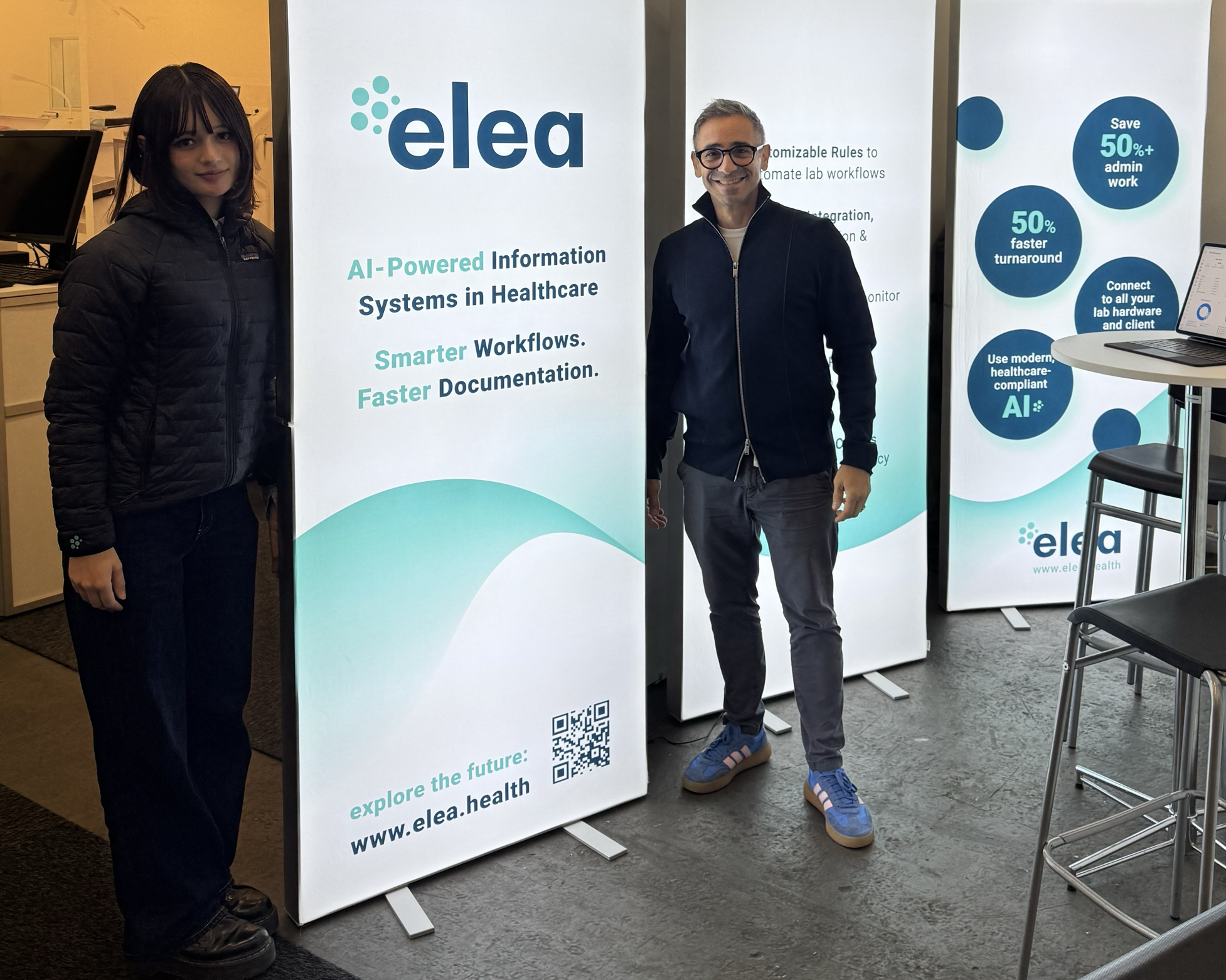
Stockholm, ECP 2026
The 38th European Congress of Pathology brought pathologists, clinicians and researchers from across Europe and beyond to Stockholm, under the motto Innovation Driving Excellence in Pathology. The focus sat exactly where we work every day: digital pathology, AI integration, and the question of how new technology actually earns its place in routine diagnostics.
It was a busy few days. Familiar faces, former colleagues and many new contacts. Being at ECP year after year is paying off, and it opened the door to some very good conversations.
Thank you to everyone who stopped by, challenged our thinking and told us what is happening in their lab. We are taking a lot home with us.
Don't dictate. Direct.
On September 17, we went live with Techcyte for a joint webinar on the part of pathology that rarely gets the spotlight: what happens after the diagnosis is made.
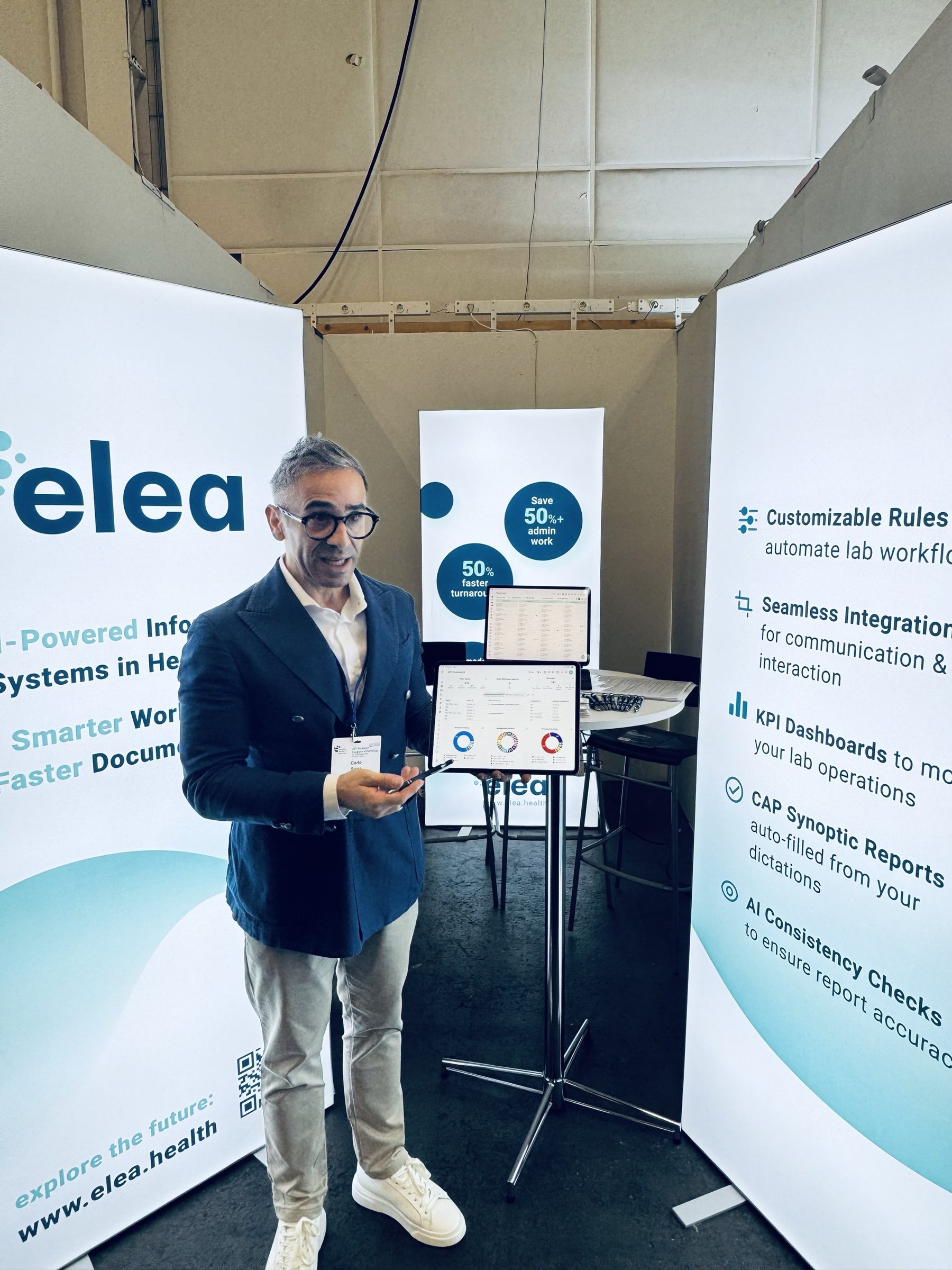
Richard Gruner, who leads elea's Business Development in North America, showed eleaDNAi working directly inside Techcyte Fusion AP, moderated by Techcyte's Troy Bankhead. In the live demo, Richard dictated microscopic descriptions per specimen, corrected measurements by voice, added ICD-10 and CPT codes and generated a complete CAP synoptic report with a single command, all without leaving the case.
The difference between dictating and directing is the whole point. Dictation captures words: you speak, the system transcribes, you correct. Directing means telling the system what you want, while eleaDNAi structures the case and fills the report. The pathologist stays in command, not in transcription mode.
The Q&A brought up exactly the right questions. Yes, eleaDNAi is multilingual, the demo itself ran in German. Yes, it runs fully encrypted on elea's own infrastructure, with on-premise deployment available. And yes, it works with Techcyte Fusion regardless of which LIS your lab runs.

Signals from the field
What ECP told us about AI in pathology
One thing was impossible to miss in Stockholm: AI and digitalization have arrived in pathology, and the range of offerings has never been this visible. At the same time, the field is anything but uniform. Some labs are fully digital, others are just getting started, and many sit somewhere in between.
In almost every conversation, the same question came up: what role should AI actually play in the diagnostic process? Many still picture AI as a pure diagnostic tool, one that asks the pathologist to hand over part of the decision.
We see it the other way around. eleaDNAi is a voice-based digital assistant that accompanies pathologists through reporting. What is spoken becomes a structured report, documentation happens inside the same workflow, and nothing has to be typed up or transferred afterwards. elea deliberately takes no diagnostic responsibility. The medical decision stays with the pathologist, and everything around it gets easier.
The most useful conversations were about expectations. When we asked users what AI in an LIS should actually deliver, the answers were remarkably consistent: support in the daily work of documentation and processes, and a noticeable improvement to that work, not just another layer on top of it. That is exactly what we are building.
Inside elea
Our workshop week in Hamburg
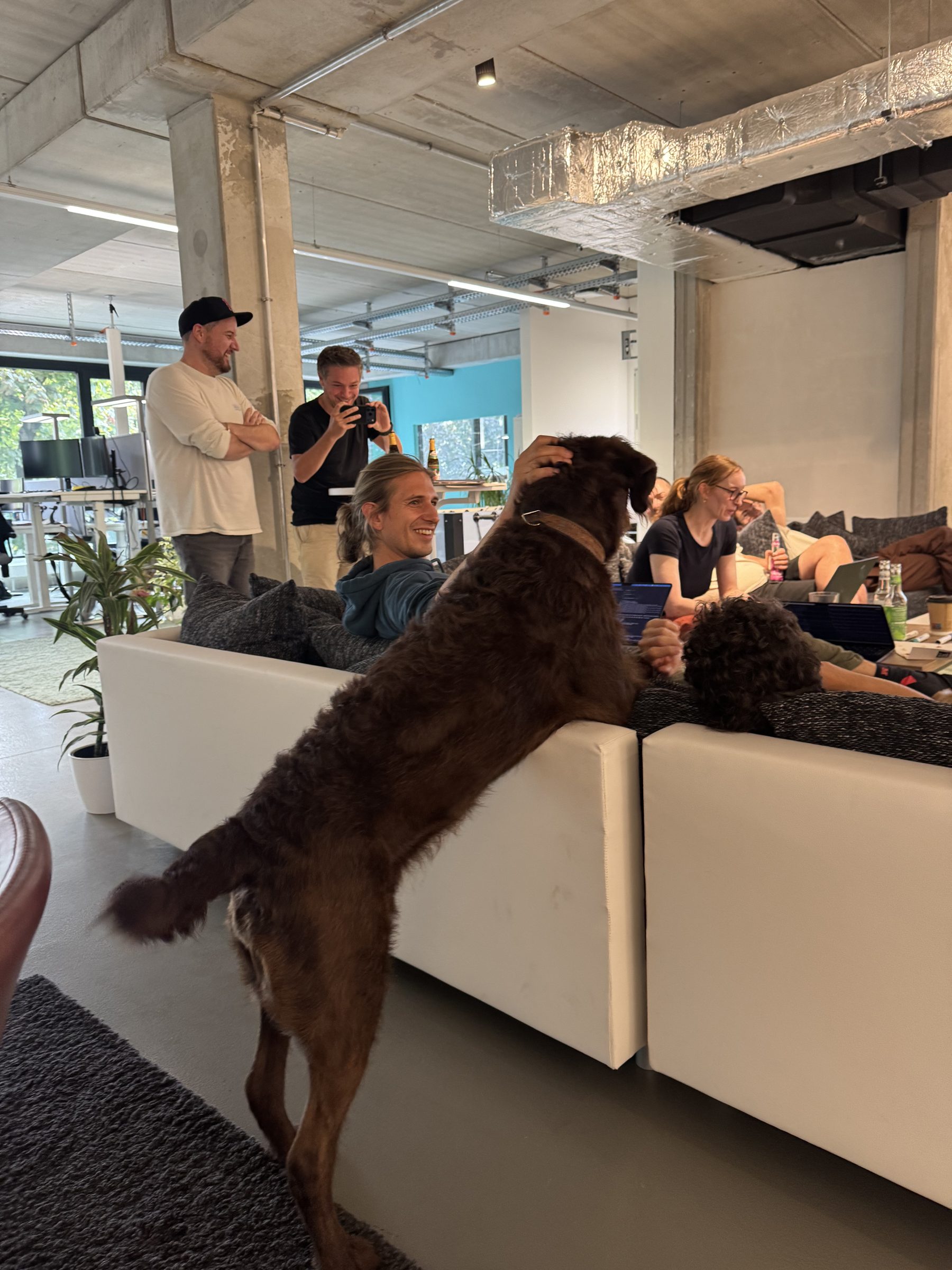
In September, the elea team came together in Hamburg for a week of stepping back. Time to celebrate what we have built so far, and to get into the ideas we want to tackle next.
Open problems on the table, honest discussions, and a few new directions we are taking forward. Workshop weeks are where we recharge, sharpen our thinking, and remember how much we enjoy doing this together.
Thank you to everyone who brought ideas, questions and energy into the week. It is the team that makes elea what it is, and weeks like this one show it.
Read of the Month
"Can Technology Make Pathology More Human? Part 2", The Pathologist
In the second part of The Pathologist's round table, four voices from pathology practice and industry discuss how AI can support pathology expertise instead of constraining it, and what that could mean for the role of the pathologist within healthcare.
The panel lands on a view we share. AI should take work off the pathologist's desk, not decisions out of their hands. The routine administrative and technical load is where it can help most, so that pathologists can work at the top of their license. And as precision medicine brings more biomarkers, more testing requirements and more complexity into every case, that freed capacity becomes more valuable, not less.
It is the same line we hold at elea: the system supports, the pathologist decides. The time that comes back goes to the work only a pathologist can do.
What's Coming Next?
A busy October
The autumn conference season is in full swing, and you will find us in quite a few places:
🇩🇪 26. Bundeskongress Pathologie · Berlin · October 2 to 3
🇺🇸 CAP26 · Las Vegas · Booth 115 · October 2 to 6
🇺🇸 PathVisions 2026 · San Diego · Booth 516 · October 16 to 18
3rd PATHORA Symposium on Prostate Cancer
On October 21, we are glad to support the 3rd PATHORA Symposium on Prostate Cancer in Tübingen as a sponsor. The evening brings together experts from urology, radiology, nuclear medicine and pathology, from robotic surgery and imaging to theranostics and the latest in histopathology and molecular pathology. Thank you to Prof. Dr. med. Sven Perner for making this exchange possible.